What to Do if Baby Oxygen Is Low in 4 Week Old
Most babies are born with healthy hearts and have plenty oxygen in their blood. Nevertheless, near 1 infant in every 100 is born with a congenital eye defect (CHD) and 25% of those babies with CHD will have a critical congenital heart defect (CCHD).
Babies with critical CHDs have low oxygen levels and usually require surgery or other procedures in the starting time yr of life. Sometimes intervention must be done urgently, inside the first days or weeks of a infant's life. Some examples of critical CHDs include coarctation of the aorta, transposition of the bang-up arteries, hypoplastic left heart syndrome, and tetralogy of Fallot.
What is pulse oximetry?
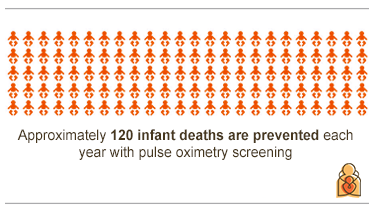
Pulse oximetry (also called pulse ox) is a elementary and painless examination that measures the level oxygen is in the blood.
There are types of CCHD that cause lower than usual blood oxygen levels and those can exist picked up by pulse oximetry―even before a baby becomes sick. Early detection and appropriate direction can and so be provided and may better a infant's event.
The American Academy of Pediatrics (AAP) recommends pulse oximetry be performed at all newborn screenings to detect CCHD. As of 2018, policies for screening newborns take been implemented in all states in the U.Due south.
Fetal ultrasounds of the heart do non discover all types of heart defects.
While many problems in the fetal heart are now found early by fetal ultrasounds―and families are getting referred earlier to pediatric cardiologists for further care, there are still cases of CHD that tin can exist missed.
Many newborns develop signs and symptoms of CCHD such as turning very blue or animate fast right after birth. Those babies are diagnosed and treated earlier being discharged from the infirmary. All the same, there are babies with certain types of CCHD who may look and act healthy for several days before becoming suddenly seriously ill at home.
How is this screening is done? |
|---|
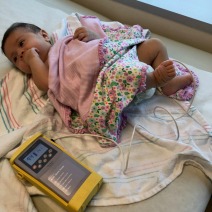 A minor soft sensor is wrapped effectually the baby's right hand and one foot. The sensor is hooked upwards to a monitor for about v minutes and measures the oxygen level in the blood and the heart rate. Information technology is fast, easy, and does non hurt. Pulse oximetry screening is done afterward 24 hours afterward birth to allow the babe's centre and lungs to fully arrange to life outside his or her mother. Later the screening is completed, the doctor or nurse will go over the reading with the baby'southward parents.
 What happens a baby fails the pulse oximetry screening?
If the screening test suggests a problem, boosted testing to evaluate for CHD or for other potential causes of low oxygen volition be necessary before the baby will exist discharged from the hospital.
Testing may include a chest radiography and bloodwork. A thorough ultrasound of the infant'southward middle called an echocardiogram will be performed and read by a pediatric cardiologist. The repeat volition evaluate all the structures and part of the baby's heart in detail. If the baby's repeat shows any problems, the baby'southward medical squad will talk over next steps with the parents in detail. Encounter Common Types of Cardiac Testing for more than information.
Note: As with any screening test, sometimes there tin exist times when the pulse oximetry screening test is not correct. Sometimes there tin exist false positives, meaning that while the pulse ox screen suggests a problem, the repeat will be reassuring that the eye is normal. Just because a baby fails the pulse oximetry screening exam does not mean that the baby has a middle defect. There are other reasons that a baby may have lower oxygen levels, such as infection or lung problems. These are as well very helpful to be picked up early. Equally well, some healthy babies tin have a low pulse oximetry reading while their heart and lungs are adjusting after birth.
If a infant passes the pulse oximetry screening, does information technology mean he or she has no heart defects?
Unfortunately, no. Pulse oximetry testing picks upward just some types of CHD. Centre defects which are not causing a low claret oxygen level at the time of the screen are non picked up by the test.
Even if a babe passes the pulse oximetry screening, parents should watch:
-
How well their infant is feeding
-
Whatsoever difficulty in breathing
-
Increased irritability
-
Excessive sleepiness
-
Bluish colour to the lips or skin
-
Grunting
-
Fast breathing
-
Poor weight gain
Parents are advised to contact their baby's doctor right away if they notice any of these signs.
Additional Information & Resources:
-
Newborn Screening Tests
-
Tests & Screenings During Pregnancy
-
Challenges Faced by Parents of Children with Congenital Eye Affliction
-
Genetics and Congenital Heart Defects
-
Endorsement of Health and Homo Services Recommendation for Pulse Oximetry Screening for Critical Built Centre Illness (AAP Policy Argument)
-
Clan of U.Due south. Country Implementation of Newborn Screening Policies for Critical Congenital Center Disease with Early Infant Cardiac Deaths (JAMA, 2017)
The information contained on this Web site should not be used every bit a substitute for the medical intendance and advice of your pediatrician. At that place may be variations in treatment that your pediatrician may recommend based on private facts and circumstances.
Source: https://www.healthychildren.org/English/ages-stages/baby/Pages/Newborn-Pulse-Oximetry-Screening-to-Detect-Critical-Congenital-Heart-Disease.aspx
0 Response to "What to Do if Baby Oxygen Is Low in 4 Week Old"
Post a Comment